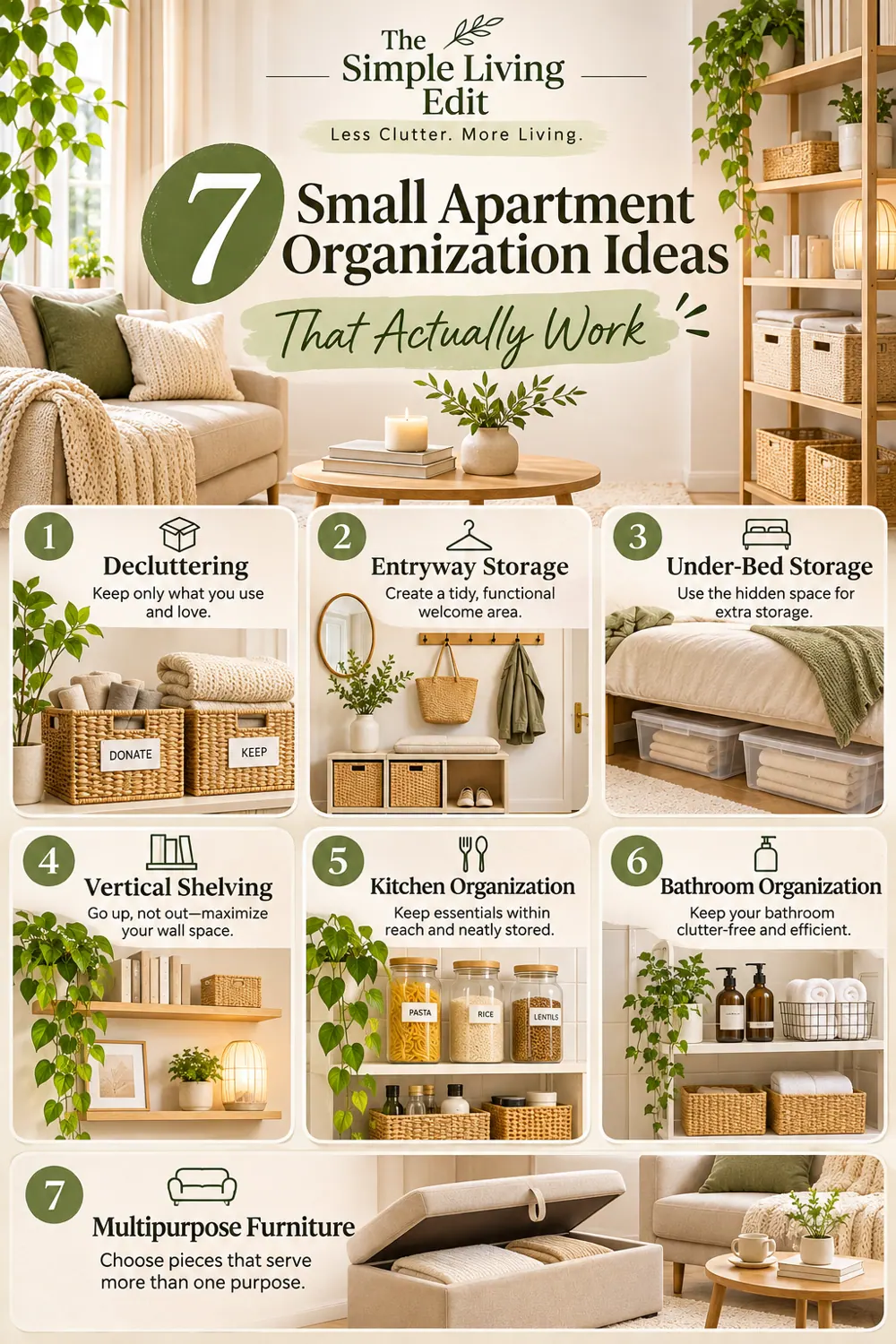
7 Small Apartment Organization Ideas That Actually Work
A smaller home can still feel comfortable, welcoming, and easy to maintain. The trick is to make your space work for your daily routines—not to buy a basket for everything.
The Simple Living Edit · Home Organization
When space is limited, every cupboard, drawer, and corner matters. But organizing a small apartment does not have to mean expensive renovations or a matching set of storage containers. Often, the most effective improvements begin with removing what you no longer need and giving your everyday essentials a sensible place to live.
Here are seven realistic ways to organize a small home, whether you rent a studio, share an apartment, or simply want less visual clutter.
1. Declutter before buying storage
Before ordering organizers, open one drawer or cupboard and look at what is actually inside. Sort items into four simple groups: keep, donate, recycle, and relocate. Ask whether you use each item, need it, or genuinely enjoy having it around. This is not about getting rid of everything; it is about keeping the things that support your life.
Start small. A single shelf or kitchen drawer is enough for a first session. Once you know what remains, you can choose storage that fits the items rather than buying containers that create more clutter.
2. Create a functional entryway
Even if your apartment has no formal hallway, create a small landing zone by the door. A tray for keys, a hook for bags, and a designated spot for shoes can prevent belongings from spreading across the living room. In a narrow space, a slim wall-mounted rack or compact shoe cabinet may be more useful than a large bench.
If you rent, check which mounting methods your lease allows. Avoid overloading adhesive hooks, especially with heavy bags.
3. Use under-bed storage thoughtfully
The space beneath your bed can hold off-season bedding, spare linens, or clothes you do not need every week. Low, labeled bins or soft zippered bags make items easier to find. Measure the clearance before buying anything and leave room for ventilation and regular cleaning.
Keep frequently used things in accessible drawers or shelves instead. Under-bed storage works best for items you only reach for occasionally.
4. Think vertically, not just horizontally
When floor space is limited, look up. Shelves above a desk, a narrow bookcase, or hooks inside a cupboard can create room without crowding walkways. Use higher shelves for lighter, less frequently used items, and keep daily essentials within easy reach.
Always secure tall furniture appropriately and use fixings suitable for the wall. If drilling is not permitted, consider freestanding shelves or tension-based organizers that are rated for the intended load.
5. Organize kitchen essentials by how you cook
A functional kitchen is not necessarily a perfectly styled pantry. Group items by task: breakfast supplies together, cooking oils near the preparation area, and frequently used utensils close to where you need them. Drawer dividers and small shelf risers can help you see what you already own.
Clear containers can be useful, but you do not need to decant every ingredient. Keep important food labels, allergen details, and expiration information available. Before buying jars, try reorganizing the cupboards you already have.
6. Simplify bathroom storage
Small bathrooms often become cluttered because several categories of products share the same limited counter space. Separate daily essentials from backup supplies. A small basket for frequently used items and a labeled box for extras can make cleaning easier.
Choose moisture-resistant storage and keep medicines and cleaning products safely stored, particularly where children may have access. Avoid placing heavy items on unstable over-toilet shelving.
7. Choose furniture that does more than one job
In a compact home, multifunctional furniture can make a noticeable difference. A storage ottoman can hold throws while serving as extra seating; a lift-top table may double as a workspace; nesting tables can be tucked away when guests leave.
Before buying, measure your room and think about how you move through it. A smaller, well-chosen piece often works better than a large storage unit that blocks natural light or a walkway.
A 15-minute home reset to try tonight
Set a timer and spend three minutes returning items to their proper places, four minutes clearing the most-used surface, four minutes tidying your kitchen, and four minutes preparing your entryway for tomorrow. You do not need to finish every chore. The goal is a home that feels easier to use when you wake up.
The Weekly Home Reset Checklist
A simple printable to help you keep up with everyday home routines. The free download and complete Home Reset Planner are being prepared.
See free resourcesView plannerThis article is for general inspiration. Product recommendations may be added later and will be clearly disclosed when affiliate links are used.